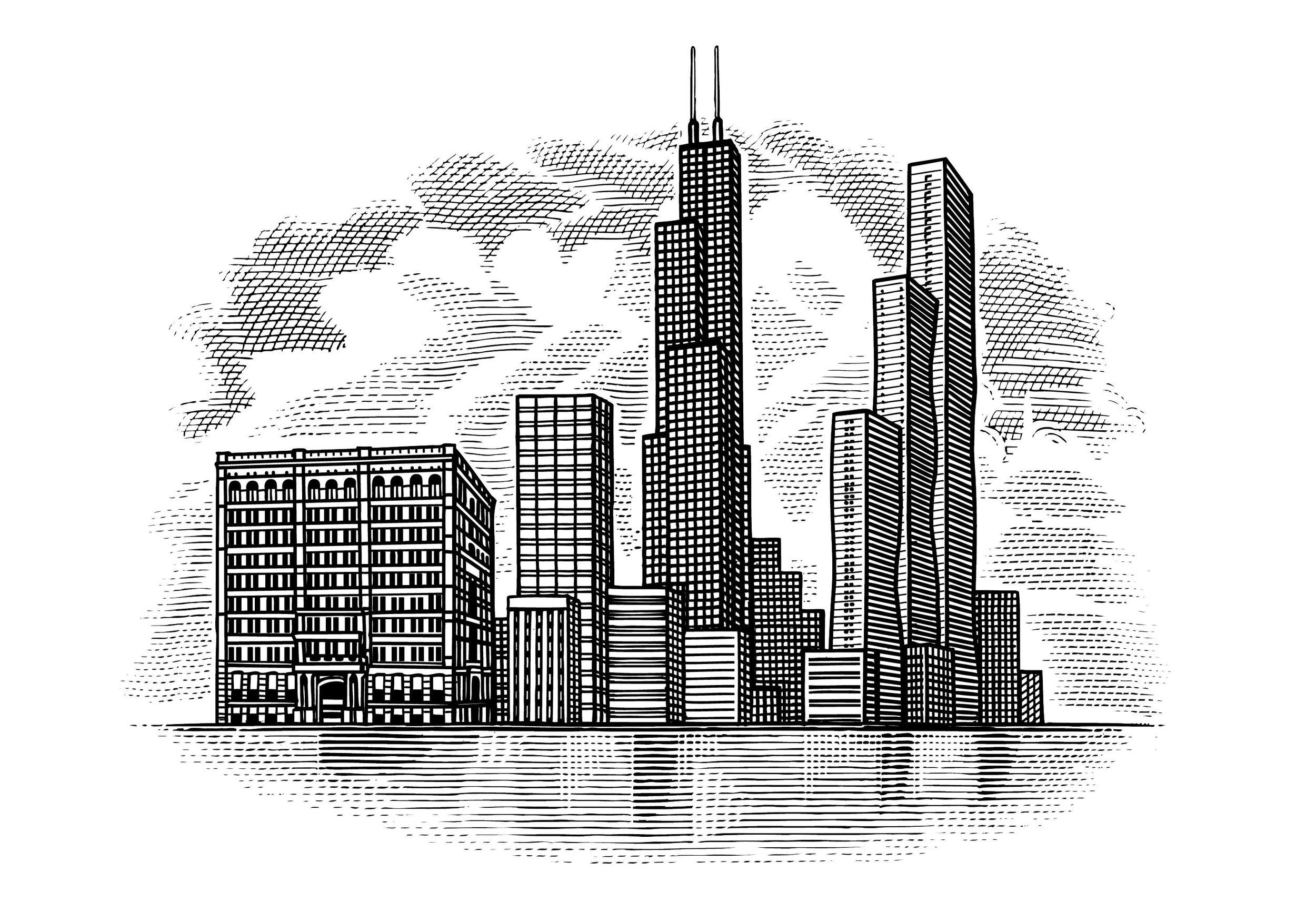
The Chair of Peter Runs Through Chicago
When I last visited Rome in 2023 I made it a point to arrange for a tour of the scavi in St. Peter’s Basilica. A scavi tour was the one item I never checked off my list when I studied in Rome in college, and it wasn’t something I had done on any subsequent visits, either. As a Catholic, and as someone extremely interested in ancient, Roman, Catholic and ancient Roman Catholic history, going on this tour was high on my list.
The scavi is the subterranean necropolis buried beneath the Vatican. It follows the path of an ancient road, as Roman necropolises tended to do, and still contains dozens of graves. But one grave, or tomb as it is, is more significant than the others: the tomb of the apostle Peter, prince of the apostles, and the first pope.
The scavi tour immerses attendees in the archeology of the site. The tour guide explains the history of what you are seeing, from the time of the ancient Romans more or less to the present, and the history of the discoveries made there. The case is convincingly made that the burial place and the bones venerated as Peter’s are truly his, from the circumstantial evidence of the place as a historical site of veneration to radiocarbon dating the bones themselves to determine that they come from a first century male who died in his sixties.
The fact that a specific, coherent, convincing circumstantial — and in some ways, direct — case can be made for a set of 2000 year old bones housed within a structure and a city that have undergone tremendous change lends credence to the claims that the papacy, and by extension the Roman Catholic Church, is established on historical fact.
It’s almost impossible to escape this conclusion by the end of the tour, but the best is indeed saved for last. Before returning to the basilica, the tour approaches as close as it can to Peter’s final resting place. About thirty feet away his bones are left on display. They are fragmentary in the first place, and from that distance they can be difficult to observe in detail, but there is no mistaking what they are.
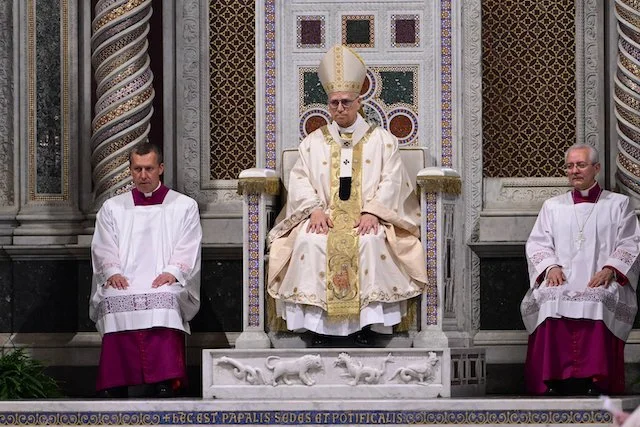
An ocean and several centuries removed from the scavi there is another connection to Peter in the United States. The election of Robert Prevost, Pope Leo XIV, in the spring of 2025 means that the Chair of Peter now runs through Chicago.
What an extraordinary event this is. Imagine trying to explain this confluence of events to any other pope throughout history, even contemporary office holders. The land that would become the United States, and the territory where Chicago would be established, was not even known to Western Europe for the first fourteen centuries of the Catholic Church’s existence (indeed, the New World has only been “known” for 500 years, or a quarter of the Church’s history).
Would the Italian pontiffs — 217 in total — ever have believed that the officeholder of the Holy See would hail from beyond Europe? Would the Avingon Popes have believed the Vicar of Christ would come from the interior of a continent they couldn’t have known about? What would St. Peter think?
Even before the 2025 conclave it was accepted wisdom that the United States would never field a pope. It would be crazy, the thinking went, for the Church to bolster the United State’s hard and soft power dominance by giving an American the spiritual authority of the Church. An American pope would create a super team at the expense of the global institutional church.
But in Prevost the cardinals found a way to thread the needle. American born and raised, he also spent a significant amount of time serving in Peru and Rome. He’s fluent in English, Spanish, and Italian, and culturally blurs some lines as well.
For Americans broadly and Chicagoans more narrowly, seeing Leo mold himself into the Petrine ministry can evoke a happy bewilderment. One day, he is leading the Way of the Cross at the Colosseum in Rome. Another day, he is chanting “Go White Sox!” to the crowd at the Sunday audience (and appropriately taunting the Cubs). He regularly speaks in English, sings in Latin, and is reportedly a fan of suburban Chicago pizza chain Aurelio’s. It’s a lot to take in — but it’s a lot of fun, too.